

Concrete driveways last 30 to 50 years with minimal maintenance, making them one of the smartest long-term investments for your home. But that durability comes with a higher upfront cost than asphalt or gravel. Most homeowners pay between $6 and $20 per square foot, with total projects ranging from $2,700 to $14,500 depending on size and finish.
This guide breaks down exactly how much a concrete driveway costs so you can budget accurately.
What you’ll learn:
- Average costs by driveway size and finish type
- Key factors that drive your price up or down
- How concrete compares to asphalt, pavers, and gravel
- Long-term value, lifespan, and maintenance costs
- Smart ways to save without sacrificing quality
At Sublime Pavers, we help Broward County homeowners choose the right driveway material for their budget and lifestyle. If you’re weighing concrete against pavers or other options, we’re happy to walk you through the pros and cons.
Average Costs by Driveway Size and Finish Type
The total cost of your concrete driveway project depends on two primary factors: how big your driveway is and what type of concrete finish you choose. Here’s what homeowners are actually paying.
Cost by Driveway Size
Most contractors price concrete driveway installation by the square foot, so larger driveways cost more overall but often get better per-square-foot rates.
| Driveway Type | Dimensions | Square Footage | Estimated Cost |
|---|---|---|---|
| Single-car | 10′ x 20′ | 200 sq ft | $1,200-$4,000 |
| Single-car with turnaround | 12′ x 30′ | 360 sq ft | $2,160-$7,200 |
| Two-car | 20′ x 20′ | 400 sq ft | $2,400-$8,000 |
| Two-car extended | 24′ x 24′ | 576 sq ft | $3,456-$11,520 |
| Three-car | 30′ x 20′ | 600 sq ft | $3,600-$12,000 |
| Large/custom | Various | 1,000+ sq ft | $6,000-$20,000+ |
The national average for a standard two-car concrete driveway runs around $6,400, though your actual cost will vary based on finish type, location, and site conditions.
Cost by Finish Type
The concrete finish you select dramatically impacts your price per square foot. A basic broom finish costs roughly half what a high-end stamped design runs.
Plain/Broom Finish: $6 to $10 per square foot
This is the most economical choice for homeowners who want durability without decorative upgrades. The broom finish creates a textured, non-slip surface that’s practical and clean-looking. For a 500 sq ft driveway, expect to pay $3,000 to $5,000.
Colored Concrete: $8 to $14 per square foot
Adding integral color transforms plain gray concrete into warmer tones that complement your house and landscaping. Colors range from subtle earth tones to bolder options. A 500 sq ft colored driveway runs $4,000 to $7,000.
Exposed Aggregate: $10 to $16 per square foot
This finish reveals the small stones within the concrete mix, creating a textured, gravel-like appearance with excellent traction. It’s a popular middle-ground option that adds visual interest without the premium cost of stamping. Budget $5,000 to $8,000 for 500 sq ft.
Stamped Concrete: $12 to $20 per square foot
Stamped patterns can mimic brick, stone, slate, or tile at a fraction of the cost of those materials. The price increases with pattern complexity and the number of colors used. A 500 sq ft stamped driveway typically costs $6,000 to $10,000.
High-End Decorative: $20 to $25+ per square foot
Premium decorative finishes combine multiple techniques like stamping, staining, and hand-detailed artistry. These driveways become genuine showpieces but come with showpiece pricing. Expect $10,000 to $12,500+ for 500 sq ft.
Quick Finish Comparison
| Finish Type | Cost/Sq Ft | 500 Sq Ft Driveway | Best For |
|---|---|---|---|
| Broom finish | $6-$10 | $3,000-$5,000 | Budget-conscious, practical |
| Colored | $8-$14 | $4,000-$7,000 | Subtle upgrade |
| Exposed aggregate | $10-$16 | $5,000-$8,000 | Texture and traction |
| Stamped | $12-$20 | $6,000-$10,000 | Decorative appeal |
| High-end decorative | $20-$25+ | $10,000-$12,500+ | Luxury homes |
Key Factors That Drive Your Price Up or Down
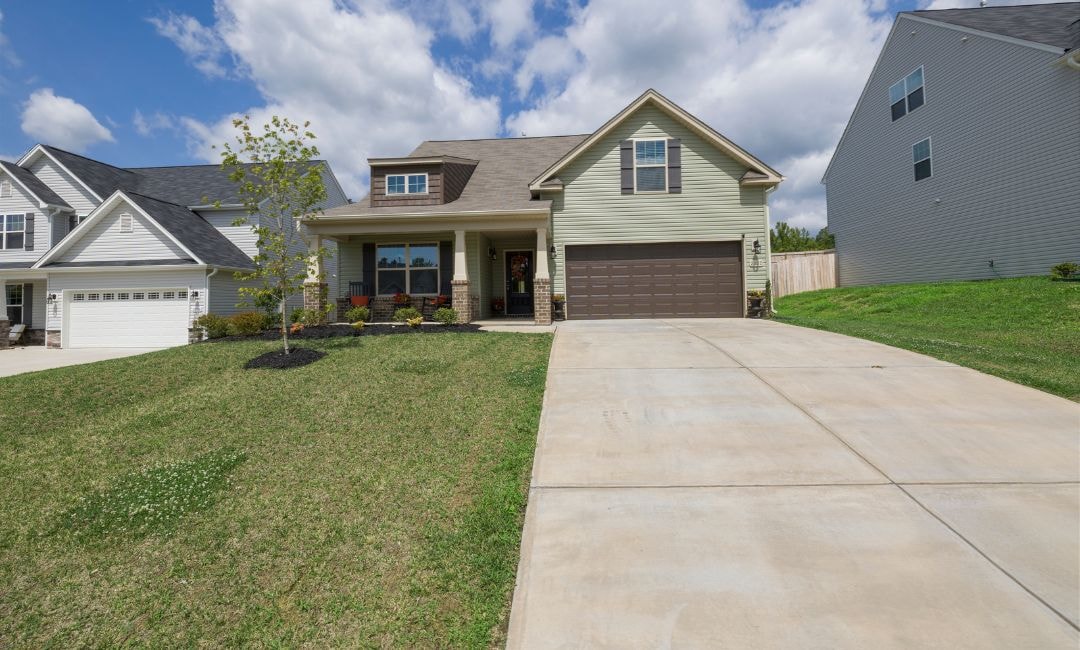
Beyond driveway size and finish, several factors significantly impact your final cost. Understanding these helps you budget accurately and avoid surprises.
Slab Thickness
Standard residential driveways use a 4-inch-thick slab, which handles regular cars and light trucks without issue. But if you need your driveway to hold heavier vehicles like RVs, boats on trailers, or work trucks, contractors recommend 5 to 6 inches of thickness.
- 4-inch slab: Standard pricing ($6-$15 per square foot)
- 5-inch slab: Add 15-20% to base cost
- 6-inch slab: Add 25-35% to base cost
The extra concrete and rebar reinforcement adds material and labor costs, but it prevents cracking and premature failure under heavy loads.
Reinforcement
Rebar or wire mesh strengthens your driveway and helps prevent cracking from ground movement or heavy vehicles.
- Wire mesh: $0.50 to $1 per square foot additional
- Rebar reinforcement: $1 to $3 per square foot additional
Most contractors recommend at least wire mesh for residential driveways. Rebar is standard for driveways that will see significant weight or traffic.
Demolition and Removal
If you have an existing driveway that needs to go, demolition adds significant cost:
- Concrete removal: $2 to $6 per square foot
- Asphalt removal: $1 to $3 per square foot
- Hauling and disposal: Often included, or $200 to $500 additional
For a 500 sq ft old driveway, removal can add $1,000 to $3,000 to your total cost.
Site Preparation
Proper site preparation is crucial for a driveway that lasts decades. Prep work includes:
- Excavation: $1 to $5 per square foot, depending on soil conditions
- Grading: $1 to $3 per square foot for proper slope and drainage
- Subbase installation: $12 to $18 per cubic yard for gravel base
If your site has poor soil, drainage issues, or requires significant grading, expect higher costs. Sloped properties cost more than flat ones due to the complexity of forming and pouring.
Labor Costs
Labor typically accounts for 40% to 60% of your concrete driveway cost, running $2 to $10 per square foot depending on complexity and location.
According to labor statistics, rates vary significantly by region. Urban areas and high-cost-of-living locations like South Florida, California, and the Northeast charge 20% to 40% more than national averages.
Labor increases for:
- Complex shapes (curves, L-shapes, circles)
- Steep slopes requiring sectional pours
- Decorative finishes requiring skilled finishing work
- Difficult site access
Permits and Location
Most municipalities require permits for driveway installation, typically costing $50 to $200. Your contractor usually handles this, but the cost gets passed to you.
Geographic location affects more than just labor:
- Material availability and delivery costs
- Seasonal limitations (can’t pour in freezing temperatures)
- Local code requirements for thickness or drainage
Add-On Features
Optional upgrades that increase your final cost:
- Heated driveway: $12 to $25 per square foot additional
- Decorative borders: $5 to $15 per linear foot
- Drainage systems: $400 to $2,400
- Driveway apron: $1,530 to $4,320
- Sealing: $1 to $2 per square foot
How Concrete Compares to Asphalt, Pavers, and Gravel
Choosing the right driveway material means weighing upfront costs against long-term value. Here’s how concrete stacks up against the alternatives.
Concrete vs. Asphalt
Upfront Cost:
- Concrete: $6 to $20 per square foot
- Asphalt driveway cost: $7 to $15 per square foot
Asphalt costs less initially, but the gap is smaller than many homeowners expect. For a 500 sq ft driveway, you might save $500 to $2,500 choosing asphalt over basic concrete.
Durability and Lifespan:
- Concrete: 30 to 50 years
- Asphalt: 15 to 20 years
Concrete’s longer lifespan means you’ll likely replace an asphalt driveway twice before needing to replace concrete once.
Maintenance:
- Concrete: Seal every 2 to 5 years, minimal maintenance otherwise
- Asphalt: Seal every 2 to 3 years, more prone to cracking and potholes
Climate Considerations:
- Concrete performs better in hot weather (asphalt can soften and develop ruts)
- Asphalt handles freeze-thaw cycles better in cold climates
- Concrete can crack in extreme cold without proper installation
Winner: Concrete is the better long-term investment in warm climates like South Florida. Asphalt may make sense in areas with harsh winters.
Concrete vs. Pavers
Upfront Cost:
- Concrete: $6 to $20 per square foot
- Pavers: $10 to $50 per square foot
Pavers cost significantly more upfront, especially for premium materials like natural stone or brick.
Durability and Lifespan:
- Concrete: 30 to 50 years
- Pavers: 50 to 100 years
Pavers can last a century with proper maintenance. If individual pavers crack or settle, you can replace just those pieces rather than the entire driveway.
Curb Appeal:
- Concrete offers good versatility with decorative finishes
- Pavers provide premium aesthetics and customization options
Maintenance:
- Concrete requires less maintenance overall
- Pavers need periodic re-sanding of joints and may shift over time
Winner: Concrete offers better value for homeowners prioritizing budget. Pavers are worth the premium for those who want maximum curb appeal and are willing to invest in a longer-lasting, more visually striking driveway.
Concrete vs. Gravel
Upfront Cost:
- Concrete: $6 to $20 per square foot
- Gravel: $1 to $3 per square foot
Gravel is the cheapest option by far, costing roughly 75% less than concrete.
Durability and Lifespan:
- Concrete: 30 to 50 years with minimal maintenance
- Gravel: Indefinite lifespan but requires ongoing replenishment
Maintenance:
- Concrete: Seal periodically, occasional crack repair
- Gravel: Regular raking, adding new gravel every few years, and weed control
Practical Considerations:
- Gravel works best for rural properties or long driveways where concrete would be cost-prohibitive
- Concrete provides a smooth finish for easier snow removal and walking
- Gravel can scatter onto lawns and requires edging to contain
Winner: Concrete for suburban homes where appearance and low maintenance matter. Gravel for rural properties, budget-constrained projects, or temporary solutions.
Material Comparison Summary
| Factor | Concrete | Asphalt | Pavers | Gravel |
|---|---|---|---|---|
| Cost/Sq Ft | $6-$20 | $7-$15 | $10-$50 | $1-$3 |
| Lifespan | 30-50 years | 15-20 years | 50-100 years | Ongoing |
| Maintenance | Low | Medium | Low-Medium | High |
| Curb Appeal | Good | Fair | Excellent | Fair |
| Best Climate | Warm/moderate | Cold | All | Rural |
Long-Term Value, Lifespan, and Maintenance Costs

A concrete driveway is more than an upfront expense. It’s a long-term investment in your property. Understanding the full cost of ownership helps you make a smarter decision.
Lifespan and Durability
With proper maintenance, a concrete driveway lasts 30 to 50 years. That’s roughly double the lifespan of asphalt and comparable to premium pavers.
Several factors affect how long your driveway actually lasts:
- Installation quality: Professional installation with proper subbase, thickness, and control joints is essential
- Climate: Freeze-thaw cycles and extreme temperature swings accelerate wear
- Usage: Heavy vehicles and high traffic reduce lifespan
- Maintenance: Regular sealing and prompt crack repair extend durability significantly
A well-installed concrete driveway that sees normal residential use should easily reach 35+ years before needing replacement.
Maintenance Costs
Concrete’s big advantage is minimal maintenance compared to alternatives. Here’s what to budget annually:
Sealing: $1 to $2 per square foot every 2 to 5 years
Professional sealing protects against moisture penetration, staining, and surface wear. For a 500 sq ft driveway, that’s $500 to $1,000 every few years, or roughly $100 to $250 annually when averaged out.
Cleaning: $80 to $220 annually
Annual pressure washing removes dirt, mold, and stains. You can DIY for about $50 in supplies or hire a professional.
Crack Repair: $3 to $25 per square foot when needed
Minor cracks can be filled for a few dollars. Major cracks or spalling require professional repair. Budget $100 to $500 for occasional repairs over the driveway’s life.
Total Long-Term Maintenance Cost
Over 30 years, expect to spend $3,000 to $6,000 on maintenance for a typical concrete driveway. That’s $100 to $200 annually on average, far less than asphalt’s ongoing sealcoating and repair needs.
Return on Investment
Does a concrete driveway increase home value? According to industry data, homeowners see a 50% to 80% return on their concrete driveway investment when selling.
A new driveway enhances curb appeal, which matters significantly to potential buyers. First impressions start at the street, and a cracked, stained driveway signals deferred maintenance throughout the property.
Beyond resale value, a quality driveway:
- Eliminates the hassle and cost of ongoing repairs
- Provides decades of reliable service
- Reduces liability from tripping hazards or vehicle damage
- Improves daily quality of life
Concrete Driveway Pros and Cons
Advantages:
- Exceptional durability (30-50 year lifespan)
- Less maintenance than asphalt
- Wide range of decorative finishes available
- Performs well in hot weather
- Doesn’t soften under UV exposure
- Higher home value contribution
Disadvantages:
- Higher upfront cost than asphalt or gravel
- Can crack in extreme cold or from ground shifting
- Stains more visibly than darker materials
- Not ideal for very cold climates
- Repair can be more complex than asphalt patching
Is Concrete a Good Investment?
For homeowners in warm climates like South Florida, concrete is an excellent investment. The higher upfront cost pays off through decades of low-maintenance service and strong resale value contribution.
Consider concrete if:
- You plan to stay in your home for 10+ years
- Your climate is warm or moderate
- You want decorative finishes options
- Low long-term maintenance matters to you
- Curb appeal and home value are priorities
Smart Ways to Save Without Sacrificing Quality
Concrete driveway installation is a significant investment, but there are legitimate ways to reduce costs without compromising the finished product.
Choose the Right Finish for Your Budget
The biggest variable you control is finish type. A basic broom finish costs 40% to 60% less than stamped decorative finishes while still delivering the same durability.
Budget-friendly approach: Start with quality plain concrete and add a simple colored border for visual interest. You’ll get 90% of the curb appeal at 60% of the decorative cost.
Time Your Project Strategically
Contractors are busiest in spring and early summer. Schedule your job for late fall or early winter (in warm climates) or request quotes during slower periods.
Off-season scheduling can save 10% to 20% on labor costs. Contractors are more willing to negotiate when their schedule isn’t packed.
Get Multiple Estimates
This advice gets repeated because it works. Get at least three written quotes from reputable contractors. Compare:
- Total price and price per square foot
- What’s included (removal, prep work, sealing)
- Concrete thickness and reinforcement specifications
- Warranty coverage
- Timeline and payment terms
The lowest bid isn’t always best. Look for comprehensive quotes that account for all work needed.
Handle What You Can
Some contractors offer discounts if you handle preliminary tasks:
- Clear vehicles and obstacles from the work area
- Remove plants or landscaping along the driveway edges
- Handle debris disposal yourself if you have access to a trailer
Ask your contractor what you can do to reduce labor costs.
Keep Design Simple
Complex shapes cost more. A straightforward rectangular driveway minimizes waste and labor compared to:
- Curved or circular designs
- L-shaped configurations
- Multiple separate sections
- Custom borders and patterns
If you want curves or decorative elements, concentrate them in high-visibility areas (near the house or street) rather than throughout the entire driveway.
Don’t Skimp on the Foundation
This is where you should not cut corners. Proper site preparation, adequate thickness, and appropriate reinforcement determine whether your driveway lasts 20 years or 50 years.
Saving $500 on thinner concrete or skipping wire mesh can cost you thousands in costly repairs or premature replacement. Invest in the foundation; economize on decorative elements.
Maintain What You Have
If your old driveway is structurally sound with only surface issues, resurfacing costs $3 to $10 per square foot compared to $6 to $20 for full replacement.
Resurfacing works when:
- The base is stable (no settling or major cracks)
- Surface damage is cosmetic (minor cracking, fading, pitting)
- The driveway is under 20 years old
Bundle Projects
If you need a patio, walkway, or other concrete work, combining projects saves money on mobilization, equipment, and material delivery costs. Many contractors offer package discounts for larger jobs.
Make Your Concrete Investment Count With Sublime Pavers
A concrete driveway delivers decades of durable, low-maintenance service when installed properly. Now you know what drives costs, how concrete compares to alternatives, and where to save money without sacrificing quality or longevity.
Key takeaways:
- Concrete driveway cost ranges from $6 to $20 per square foot, depending on finish type and project complexity
- A standard two-car driveway costs $2,400 to $14,500, with the national average around $6,400
- Plain broom finish is the most economical choice; stamped and decorative finishes can double the price
- Slab thickness, reinforcement, site preparation, and old driveway removal significantly impact your final cost
- Concrete outlasts asphalt by 15 to 30 years and requires less maintenance over its lifespan
- Labor accounts for 40% to 60% of the total cost and varies significantly by location
- Proper installation and maintenance can extend your driveway’s life to 50+ years
- Off-season scheduling and simple designs help you save money without compromising durability
If you’re considering a new driveway in Broward County, Sublime Pavers can help you weigh concrete against pavers and other options. We’ll assess your property, discuss your budget and goals, and provide honest recommendations. Call (954) 420-6683 for a free estimate and see why South Florida homeowners trust us with their driveways.
FAQs
How much does it cost to pour a 20×20 driveway?
A 20×20 concrete driveway (400 square feet) costs $2,400 to $8,000, depending on finish type. Plain broom finish runs $2,400 to $4,000, while stamped or decorative finishes push the price to $4,800 to $8,000. Add $800 to $2,400 if you need an old driveway removed first.
How much does a 100 ft concrete driveway cost?
A 100-foot-long driveway varies by width. At 12 feet wide (1,200 sq ft), expect $7,200 to $24,000. At 20 feet wide (2,000 sq ft), costs range from $12,000 to $40,000. Longer driveways often get better per-square-foot rates due to economies of scale, so request quotes for your specific dimensions.
Is a concrete driveway cheaper than asphalt?
No, concrete costs more upfront. Concrete runs $6 to $20 per square foot while asphalt costs $7 to $15 per square foot. However, concrete lasts 30 to 50 years compared to asphalt’s 15 to 20 years and requires less maintenance. In the long run, concrete often proves more economical since you’ll replace asphalt twice before concrete needs replacement.
How much for a 2000 square foot driveway?
A 2000 square foot concrete driveway costs $12,000 to $40,000, depending on finish and site conditions. Basic broom finish runs $12,000 to $20,000. Stamped or decorative finishes range from $24,000 to $40,000. Factor in $4,000 to $12,000 additional if demolition and removal of an existing driveway is needed.


